Fluxnova
A secure, open-source orchestration platform that restores control, enhances agility, and supports long-term technology sovereignty.



At Scott Logic, we believe that open source offers immeasurable benefits and are keen to see increased adoption, while tackling the sustainability challenges. There are four main ways by which we deliver on our commitment:

We have an open source first policy. If a viable open source project exists, or one which we can readily adapt to meet our requirements, it is our first choice. We also take particular care when adopting open source components to ensure we understand the risks these may present.

We have a permissive open source policy and actively encourage our team to contribute to open source projects.

If we create a technology solution that we feel others would benefit from, we are committed to open sourcing it.

We are active members of the Fintech Open Source Foundation (FINOS) and Linux Foundation and have partnered with various other organisations, such as Bristol Pound and J.P. Morgan to collaborate on a great many open source projects and initiatives.
Open source is the practice of developing software in the open, where the code is visible and open to being changed by anyone. What started as the free software movement in the early 90s has become a pervasive and critical part of the entire software industry. From cloud platforms to embedded systems, front-end UI to back-end data platforms, everywhere you look open source is the dominant force.
Whilst open source has many benefits when compared to closed-source proprietary solutions, it isn’t without issues. Commercial open source is thriving, however, there is an increasing reliance on community-led open source projects, many of which are struggling to sustain themselves.
Scott Logic has been an active member of the Fintech Open Source Foundation (FINOS) for a number of years. We're active in a number of their working groups and projects, including FDC3 (desktop interop standards), KDB (a time series database) and their D&I Committee. Our CTO has also served as a board member and is currently leading their nascent Technical Steering Committee.

We are recent members of The Linux Foundation, but are already active contributors. Our CTO has written their training course on WebAssembly, we are working closely with Linux Foundation Research on various survey and research projects, and have been on the organising committee of various CNCF events.

We believe that if a viable open source solution exists, or one which we can readily adapt to meet requirements, it should be the first choice. But, care needs to be taken to ensure any associated risks are truly understood.

Open source provides transparency and the opportunity for greater scrutiny, but it requires targeted action to bring those values to life. We know how to ensure open source is consumed safely, and guide our clients on maturing their own ways of working.

The value of open source needs to be related to an organisation as a whole through dedicated focus and expertise. We have helped organisations establish the necessary leadership drive and support to truly realise that value.

We have a permissive open source policy and actively encourage our teams to contribute back to open source projects, collaboratively creating shared value and innovation. We support our clients in doing the same.
Find out more about our work in Open Source and meet some of our consultants in this playlist. Click the menu button (☰) to view more videos.
We have built, and made significant contributions to, a wide range of open source projects. These are some of the highlights:
A secure, open-source orchestration platform that restores control, enhances agility, and supports long-term technology sovereignty.

An approach to classifying an organisation's technology estate to enable consistent analysis and benchmarking of its technology carbon footprint.

A comprehensive collection of risks and mitigations that support on-boarding, development of, and running Generative AI solutions.
A collection of components that make it easy to build interactive charts with D3.
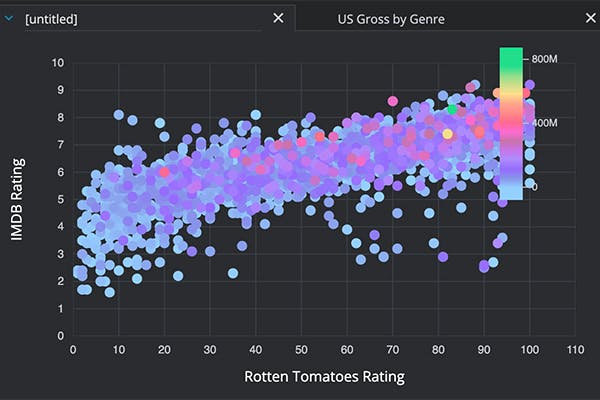
A streaming analytics library from JP Morgan, that integrates D3FC charts.
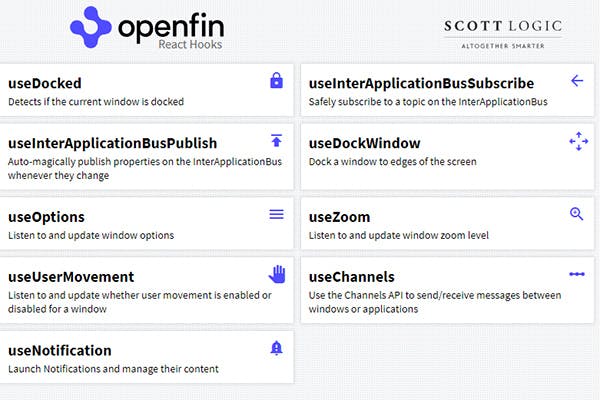
A collection of React Hooks built on top of the Openfin API.
A vanilla-JS financial amount input control.

Cla-bot is a GitHub Application for automation of Contributor Licence Agreements (CLAs).
OpenAPI Forge generates high-quality, simple and effective client libraries directly from the Open API specification, in a range of languages.
Co-authored by our CTO Colin Eberhardt, the fourth annual State of Open Source in Financial Services report offers a comprehensive, global exploration of the dynamic open source landscape within financial services in 2025.
Scott Logic's Colin Eberhardt, Graham Odds and Matt Dunderdale have co-written the new Linux Foundation report, 'World of Open Source: Europe Spotlight 2023', which benchmarks the trends and impact of open source in the public sector alone and against other industries.

For businesses where stability matters most, staying put can be a strategic choice. Enter open source: a model that offers control, continuity, and freedom from vendor lock-in. Discover why “current” doesn’t always mean “better,” how forks like Fluxnova are reshaping the upgrade debate, and why purposeful progress beats change for change’s sake.
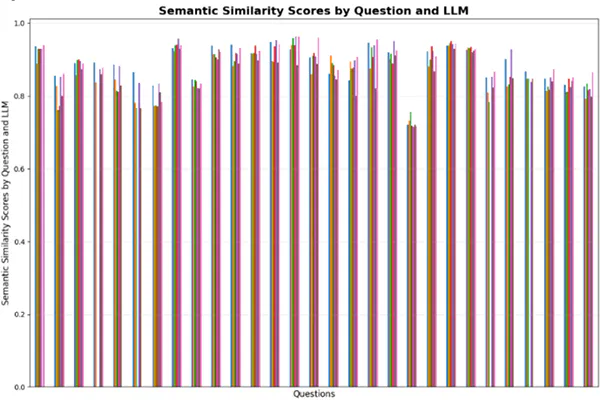
In our latest project, we set out to evaluate how different Large Language Models (LLMs) perform when responding to user prompts. Our goal was not to determine which model is superior, but to assess whether open-source models can serve as viable alternatives to OpenAI’s proprietary models.
Magnus Smith demonstrates how Higher‑Kinded‑J’s optics, effects and fluent APIs come together in practice, showing when these functional patterns shine in Java – and when simpler approaches are the better choice.
Want to know more about how we could support your open source projects?
Drop us a line to find out how our approach could help.